<?xml version="1.0" encoding="utf-8"?>
<feed xmlns="http://www.w3.org/2005/Atom">
   <title>collected eccentricities</title>
   <link rel="alternate" type="text/html" href="http://www.eccentricity.org/oldblog/" />
   <link rel="self" type="application/atom+xml" href="http://www.eccentricity.org/oldblog/atom.xml" />
   <id>tag:www.eccentricity.org,2009://1</id>
   <updated>2009-02-17T12:49:27Z</updated>
   <subtitle>Give it a month and we&apos;ll see</subtitle>
   <generator uri="http://www.sixapart.com/movabletype/">Movable Type 3.33</generator>

<entry>
   <title>making my gratitude public</title>
   <link rel="alternate" type="text/html" href="http://www.eccentricity.org/oldblog/2009/02/making_my_gratitude_public.html" />
   <id>tag:www.eccentricity.org,2009://1.51</id>
   
   <published>2009-02-17T11:42:30Z</published>
   <updated>2009-02-17T12:49:27Z</updated>
   
   <summary>I&apos;ll be handing in my D.Phil. thesis this week, after two and a half years of work and vastly more writing than I once thought myself capable of. Since it&apos;s the sort of thing that deserves to be posted publicly,...</summary>
   <author>
      <name>Tara</name>
      <uri>http://www.eccentricity.org/~tla</uri>
   </author>
         <category term="random" scheme="http://www.sixapart.com/ns/types#category" />
   
   
   <content type="html" xml:lang="en" xml:base="http://www.eccentricity.org/oldblog/">
      <![CDATA[<p>I'll be handing in my D.Phil. thesis this week, after two and a half years of work and vastly more writing than I once thought myself capable of.</p>

<p>Since it's the sort of thing that deserves to be posted publicly, and usually ends up going inside the cover of a work that collects dust and never gets consulted again, I thought I should reproduce my acknowledgments here.  It really would have been impossible without you.</p>
<hr>
<p>Any large undertaking incurs many debts of gratitude, and this thesis has been no exception.  My profound thanks must go to my husband, Mike Knell, who initially encouraged me to return for the D.Phil. program, and who has ensured constant moral support, occasional typing assistance, and uninterrupted supplies of tea.  The thesis would have been equally impossible without the support of my supervisor, Prof. Theo M. van Lint, who has seen me through with patience, humour, and frequent reminders that literature is as important as history.</p>

<p>I would also like to thank the following people and institutions:<br>
&nbsp; &nbsp; &nbsp;The Mekhitarist Fathers of Venice and Vienna, the Maštocʿ Institute of Ancient Manuscripts (Matenadaran) in Yerevan, the British Library, the Bibliothèque Nationale, and the Hill Museum and Manuscript Library, for graciously providing physical access to, and digital copies of, the manuscripts of the Chronicle.<br>
&nbsp; &nbsp; &nbsp;The Colin Matthew fund of St. Hugh's College, the faculty fund of the Oriental Institute, and Dr. Jean Knell, who each provided financial assistance necessary to visit these libraries; as well as the Nubar Pasha fund, who provided the financial means to obtain the necessary manuscript reproductions.<br>
&nbsp; &nbsp; &nbsp;Linacre College, for their award of a Mary Blaschko Graduate Scholarship for 2006–2008 which enabled me to begin the D.Phil. degree, their assistance with conference travel via the Old Members' Trust, and their indispensable assistance in various administrative matters.<br>
&nbsp; &nbsp; &nbsp;Dr. James Cotton of Queen Mary, University of London, who provided invaluable advice and assistance in the application of phylogenetics to my manuscript data.<br>
&nbsp; &nbsp; &nbsp;Lou Burnard and Dr. James Cummings of the Oxford Text Archive, who advised on the possibilities of TEI as a format for collation output and critical edition.<br>
&nbsp; &nbsp; &nbsp;My legion of proofreaders, including Dr. Alan Knell, Dr. Jasmin Raufer, Dr. Tim Stadelmann, Michael Kröll, and Andromeda Yelton.<br>
&nbsp; &nbsp; &nbsp;The members of the Vienna.pm Verein, for unfailing hospitality on my multiple visits to the city and the library there, and for the opportunity to speak about my work on Encritic to the Twin Cities Perl Workshop; and the members of the London Perl Mongers, who were ever on hand to assist with technical matters.</p>]]>
      
   </content>
</entry>
<entry>
   <title>Why direct mortgage subsidy is a bad idea</title>
   <link rel="alternate" type="text/html" href="http://www.eccentricity.org/oldblog/2008/10/why_direct_mortgage_subsidy_is.html" />
   <id>tag:www.eccentricity.org,2008://1.50</id>
   
   <published>2008-10-03T00:59:09Z</published>
   <updated>2008-10-03T00:59:53Z</updated>
   
   <summary>In my continuing series (okay, well, two posts make a series I guess) about the economy, I want to address why the populist approach won&apos;t work. A friend pointed me the other day to a Guardian article which was full...</summary>
   <author>
      <name>Tara</name>
      <uri>http://www.eccentricity.org/~tla</uri>
   </author>
         <category term="economics" scheme="http://www.sixapart.com/ns/types#category" />
   
   
   <content type="html" xml:lang="en" xml:base="http://www.eccentricity.org/oldblog/">
      <![CDATA[<p>In my continuing series (okay, well, two posts make a series I guess) about the economy, I want to address why the populist approach won't work.</p>

<p>A friend pointed me the other day to <a href="http://www.guardian.co.uk/commentisfree/2008/sep/30/marketturmoil.wallstreet">a Guardian article</a> which was full of the usual ignorant mish-mash of "solutions to help Main Street, not Wall Street" and included this:</p>

<blockquote>At the same time, several steps can be taken to reduce foreclosures. First, housing can be made more affordable for poor and middle-income Americans by converting the mortgage deduction into a cashable tax credit.</blockquote>

<p>The Guardian article is the only place I've seen this idea explicitly, seriously suggested, but I have seen a similar sentiment ("The government should be helping out Main Street, not Wall Street!"  "The real victims here are those who took out subprime mortgages?  What's in it for them?  Why aren't we helping them out directly?") in very many places.  But actually, the idea of "giving money directly to Main Street, and letting Wall Street hang" is precisely counterproductive to this goal.</p>

<p>So, let's think about this for a minute.  Pretend that, suddenly, the US passes legislation to allow mortgage interest to be a tax credit.  What this means is that you can tell the US government that you spent $X on mortgage interest in 2008, and they will subtract $X from your tax bill.  If this makes your tax bill negative, the government will send you a check for $X - (your tax bill).  It is basically saying, "the US government will pay your mortgage interest."</p>

<p>This sounds great, doesn't it?  If you're a US citizen with a mortgage, anyway.  But let's think about it for a minute.  The interest on a loan is the money that the bank who owns the loan is making, as recompense for your having taken their money to buy something for yourself.  Generally, when you have first bought a house, the mortgage interest comprises the majority of your payment.  (Play with a mortgage amortization calculator if you don't know what I mean.)  So the Guardian writer is proposing, basically, that the government should pay the bit of people's mortgages that makes up the vast majority of the monthly payment right now.  It <em>also</em> means that the government should pay, over the life of the loan, the part that is the payment to the lender for having made the loan.  And so:</p>

<ol><li>This will make it a lot easier for people to pay the mortgage, at least in the first few years.</li>
<li>This means that most of the mortgages that have been sliced & diced into CDOs will be good.</li>
<li>This means that the banks who bought CDOs will receive the profit, that is the mortgage interest, courtesy of the US government.</li>
<li>This means that the "toxic debt" won't be toxic anymore.</li>
<li>This means that the CDOs will have precisely the inflated value that the banks assumed all along that they would have.</li>
<li>This means that the US government will <em>directly</em> be paying interest money to the banks who hold the debt, that is, the investment banks who bought the CDOs.</li>
<li>This means that the "bad, stupid" CDOs that the investment banks bought won't be so stupid after all—they'll be guaranteed by the full faith and credit of the United States government!  There will be a party on Wall Street again after all!</li></ol>

<p>It's a great way to get the money straight to Wall Street, with some incidental benefit to Main Street.  But wait, I thought we were supposed to be bailing out Main Street and <em>not</em> Wall Street?  Oops.</p>

<p>The best feature about the Paulson plan is that it pays a fair price (including the pessimism about Main Street being able to pay their mortgages) for these CDOs, and since it's a fair price, they will be able to sell these CDOs for at least the price paid, in future.  The taxpayer will not, in the end, lose money if this plan is executed properly.  (Yes I know, that's a big "if", but at least it's not a dead certainty that we'll lose money.)  The plan has the side benefit, which Congress seems to have noticed, that the US government would hold a lot of slices of a lot of mortgages, and it would suddenly become possible (as it isn't at the moment) to put these mortgages back together and re-negotiate the terms with homeowners on the edge, and try to keep them in their houses.  But the main benefit is that Paulson has come up with a way to put a bunch of taxpayer money on the line to keep the economy functioning, and <em>get the money back in the end, so that the taxpayer won't be out of pocket in the end.</em>  This is the part that I love.  How many government employees do we have who can still think of ways to retain the taxpayer's money in such an impressive way?</p>]]>
      
   </content>
</entry>
<entry>
   <title>my thoughts on the financial crisis, second edition</title>
   <link rel="alternate" type="text/html" href="http://www.eccentricity.org/oldblog/2008/09/my_thoughts_on_the_financial_c.html" />
   <id>tag:www.eccentricity.org,2008://1.49</id>
   
   <published>2008-09-25T21:21:57Z</published>
   <updated>2008-09-25T21:51:11Z</updated>
   
   <summary>A couple of days ago, I wrote a long post in which I tried to explain what had actually happened with the mortgage mess in the financial market. I took it down for a bunch of reasons, but mostly because...</summary>
   <author>
      <name>Tara</name>
      <uri>http://www.eccentricity.org/~tla</uri>
   </author>
         <category term="economics" scheme="http://www.sixapart.com/ns/types#category" />
   
   
   <content type="html" xml:lang="en" xml:base="http://www.eccentricity.org/oldblog/">
      <![CDATA[<p>A couple of days ago, I wrote a long post in which I tried to explain what had actually happened with the mortgage mess in the financial market.  I took it down for a bunch of reasons, but mostly because I realized that, although I know more about how it worked than most of my friends, I didn't know enough.</p>

<p>Fortunately for me, the NPR show <a href="http://www.thisamericanlife.org/">This American Life</a> did an hour-long broadcast where they explain it in depth, and they did a pretty good job.  Even more fortunately, there is now <a href="http://www.thisamericanlife.org/extras/radio/355_transcript.pdf">a transcript</a> available, so you don't have to spend an hour listening.  I think it was well done, and it does a very good job of showing the natural market motivations that arose to cause a lot of people to make a lot of bad decisions, without having to postulate any criminal conspiracies.</p>

<p>So, what to do about it?  I find it hard to know what to advocate.  The Paulson Plan looks at the moment like it is going to go through.  I think it could work, if it is managed intelligently, and I think that Paulson has the skills to manage it intelligently, but a) he could make a mistake, and b) he could find his hands tied by the fact that he is working for the US government now, and not for the board of Goldman Sachs, and he must therefore show that he can be persuasive to a set of people that thinks along completely different lines.  One major advantage that could come of the Paulson Plan is that, suddenly, the zillions of mortgages that have no clear owner will have a clear owner, and it will be possible to re-negotiate the terms of those mortgages.  One downside to that, of course, is that you'd be hard-pressed to find an American who wants to be in debt to the government (and to their primary financial interface to the US taxpayer: the IRS.)  And I haven't even begun to touch the ideological arguments over whether the government should be in the business of mortgage administration, or of buying commercial securities on the open (albeit distressed) market.</p>

<p>I find that I am not all that concerned with "punishing the guilty".  There was clear fraud, at the very least on the part of the mortgage brokers who put down fictitious salary numbers on behalf of their clients.  Those would not be hard to prosecute, if the clients who were sold the mortgages have held onto their documents.  That would be far more satisfying to me than arbitrary caps on executive pay, which have no economic basis and, as far as I can tell, have only been proposed in order to make the "have-nots" feel like the "haves" are being punished at least a little.</p>

<p>What I do care about is the systemic problem.  (Of course I do; I'm an engineer.)  I'd love to get my hands on the design of a proper regulatory system for the US.  Over the last twenty or thirty years, the financial markets have become an amazing ground for creative engineering.  This has a lot of parallel with the computer technology world, and probably for a lot of the same reasons.  The only way to devise appropriate regulation for such financial innovation is to innovate.  The Fed needs a well-paid team of financial strategists to go over new products as they come out, and as they go to market; the job of these strategists is to look for things like asset bubbles—sudden inflations in house prices, or sudden explosions in the number of mortgages approved; that is, precisely the sort of thing that people were spotting four or five years ago—and dig around for the causes.  You can't regulate effectively until you have seen the consequences, both expected and unexpected, of a new activity.</p>

<p>I still think Hank Paulson is a smart guy, and I still hope that his plan works.  I wish I had some more effective way than "a blog with a small readership" to debate these ideas with policymakers though.</p>]]>
      
   </content>
</entry>
<entry>
   <title>New Yorker&apos;s impaired sense of irony</title>
   <link rel="alternate" type="text/html" href="http://www.eccentricity.org/oldblog/2008/07/new_yorkers_impaired_sense_of.html" />
   <id>tag:www.eccentricity.org,2008://1.47</id>
   
   <published>2008-07-15T18:19:51Z</published>
   <updated>2008-07-15T18:48:17Z</updated>
   
   <summary>There is a massive tempest in a teacup at the moment, concerning this week&apos;s New Yorker cover. It is obviously satire; is it in poor taste? Is it a brilliant statement about the absurdity of the charges that have been...</summary>
   <author>
      <name>Tara</name>
      <uri>http://www.eccentricity.org/~tla</uri>
   </author>
         <category term="politics" scheme="http://www.sixapart.com/ns/types#category" />
   
   
   <content type="html" xml:lang="en" xml:base="http://www.eccentricity.org/oldblog/">
      <![CDATA[<p>There is a massive tempest in a teacup at the moment, concerning <a href="http://afp.google.com/article/ALeqM5gDboTOUQTPu22DuFM2J78oc64fag">this week's New Yorker cover</a>.  It is obviously satire; is it in poor taste?  Is it a brilliant statement about the absurdity of the charges that have been levelled against Barack Obama?  Is it astoundingly tone-deaf?  Or are Americans just irony-impaired?</p>
 
<p>It seems to me that the New Yorker is the irony-impaired party here; perhaps their cartoonist's theme song should be Alanis Morissette's "Ironic", filled as it was with descriptions of things that are not ironic at all.  The cover is drawn like any old political cartoon; these are, of course, almost always satire, just as the New Yorker's cover claims to be.  The message of most political cartoons is clear - it's putting a satirical spin on some situation its subject was in.  The message
 of, say, <a href="http://www.economist.com/daily/kallery/displaystory.cfm?story_id=11708961">this one</a> is to satirize the (real) hypocrisy of the US about global pollution.  <a href="http://www.cagle.com/working/080711/bagley.jpg">This one</a> is making fun of Jesse Jackson based upon things he's really said and done.</p>
 
<p>The problem with the New Yorker cover is that there is no clue, either
 visual or via a caption, to tell the reader "this is a satire of something
 that isn't real", or "this is a satire about a bunch of false images of the
 subject."  You're expected to take a leap of comprehension that isn't normal
 for political cartoons, with no cue to do so.  If that cartoon were printed
 on the cover of some sort of Fox News magazine, without caption, the message 
 would be clear: Obama is a Muslim terrorist-loving America-hating weirdo.  As 
 it is, coming from the New Yorker, the reader is left with (not particularly
 funny) ambiguity, and confusion about what the message is supposed to be.  Basically, if the whole image were drawn inside a TV screen box with a logo
 of "Fair and Balanced" or some such, it would have been a lot funnier, much
 more understandable, and probably not have caused a whisper of outrage.</p>

<p>So the critics of the critics, in a sense, are right.  Americans are terrible at irony.  It's just that the New Yorker is right up there with them.</p>]]>
      
   </content>
</entry>
<entry>
   <title>the roots of all nerdiness</title>
   <link rel="alternate" type="text/html" href="http://www.eccentricity.org/oldblog/2008/03/the_roots_of_all_nerdiness.html" />
   <id>tag:www.eccentricity.org,2008://1.38</id>
   
   <published>2008-03-04T17:43:53Z</published>
   <updated>2008-05-01T00:08:02Z</updated>
   
   <summary> The game board Originally uploaded by tla. I have been branching out of my own field for the past couple of weeks, and attending a comparative philology seminar -- although I have a thing for languages, I have never...</summary>
   <author>
      <name>Tara</name>
      <uri>http://www.eccentricity.org/~tla</uri>
   </author>
         <category term="random" scheme="http://www.sixapart.com/ns/types#category" />
   
   
   <content type="html" xml:lang="en" xml:base="http://www.eccentricity.org/oldblog/">
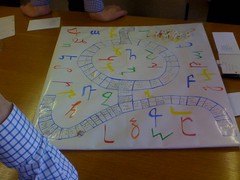
      <![CDATA[<div style="float: right; margin-left: 10px; margin-bottom: 10px;"> <a href="http://www.flickr.com/photos/tla/2309859247/" title="photo sharing"><img src="http://farm3.static.flickr.com/2342/2309859247_2a64af86c5_m.jpg" alt="" style="border: solid 2px #000000;" /></a> <br /> <span style="font-size: 0.9em; margin-top: 0px;">  <a href="http://www.flickr.com/photos/tla/2309859247/">The game board</a>  <br />  Originally uploaded by <a href="http://www.flickr.com/people/tla/">tla</a>. </span></div><p>I have been branching out of my own field for the past couple of weeks, and attending a comparative philology seminar -- although I have a thing for languages, I have never looked very much at linguistics.  It happens that the seminar is focusing this term upon Armenian, a language I know to some extent, which means that it's easier for me to follow the talks than it might otherwise be. </p>

<p>The speaker for today was forced to cancel his appearance on short notice, but the ever-resourceful convenors of the seminar came up with a brilliant substitution.  Who knew that Indo-European phonology could be turned into a board game?</p>

<p>Each player (or team) draws a card from a shuffled deck.  The card has an Indo-European root word and a modern-language word (in this case, all of the modern words were Armenian) into which the root word has evolved.  On the back of the card there is a sequence of stages that the evolution may have taken.  This sequence is handy if a player (e.g. me) knows pretty much nothing about linguistics or phonology.  On the other hand, if a player is good at phonology, he is free to arrive at a different (possibly shorter) route of evolution, as long as it is valid.  For example, the card that my team drew was:</p>

<p>*k<sup>w</sup>óteros &gt; ór (the nominative / accusative relative pronoun)</p>

<p>The steps on the back of the card were:<br/>
1. *k<sup>w</sup>óteros &gt; óteros<br/>
2. *óteros &gt; óyeros<br/>
3. *óyeros &gt; óeros<br/>
4. *óeros &gt; óros<br/>
5. *óros &gt; órokʿ<br/>
6. *órokʿ &gt; órkʿ<br/>
7. *órkʿ &gt; ór<br/></p>

<p>Now certain of these changes must happen before others; for example, the 'y' in step #3 can't drop out until the 't' has become a 'y' in step #2.  Others can happen independently; for example, it doesn't matter whether the first step I play for is the loss of initial kʿ in step #1, the changing of the last consonant from s to kʿ in step #5, or the change from t to y in step #2.</p>

<p>So everyone has his card, and his token; these tokens all get placed on the "Start" square of the board.  Each player rolls between 1 and 10 dice; each die has a 50% chance of rolling a 1, a 33% chance of rolling a 2, and a 17% chance of rolling a 0.  Add up the numbers, move the prescribed number of spaces in any direction you like.  Each square represents a known phoneme shift in Indo-European, e.g. "*t &gt; y between vowels" or " *t &gt; tʿ ".  In our example above, I very much don't want to land on the latter square -- if the t in my initial word changes to an aspirated t, it cannot then change into a y, and my word evolution will be torpedoed.  The winner is the first player who has travelled around the board landing on all the squares necessary to evolve his word in a workable order, without making a wrong move.  Squares that represent changes that are not applicable to your word (e.g. "*d &gt; t") are safe, but don't help you make progress.</p>

<p>An advanced version of the game gives players three or four words to work on at the same time.  The same principle applies, but here the player must be careful to avoid squares that will derail the evolution of any of his words.  On the other hand, of course, a single square might progress the evolution of all three!</p>

<p>One of the attendees proposed a variant in which one player's move affects the other players; this would open the possibility of player attacks on each other.  I think this would be brilliant, although there would have to be a mechanism whereby a player can recover from a bad shift.  Any game designers out there want to have a crack at it?</p><br clear="all" />]]>
      
   </content>
</entry>
<entry>
   <title>Photo op!</title>
   <link rel="alternate" type="text/html" href="http://www.eccentricity.org/oldblog/2007/07/photo_op.html" />
   <id>tag:www.eccentricity.org,2007://1.28</id>
   
   <published>2007-07-06T23:43:09Z</published>
   <updated>2007-07-07T09:45:39Z</updated>
   
   <summary> David Millar Originally uploaded by tla. So there I was, stomping around Southwark in a very bad mood indeed. I had planned to camp out in Trafalgar Square to watch the opening ceremony for the Tour de France, but...</summary>
   <author>
      <name>Tara</name>
      <uri>http://www.eccentricity.org/~tla</uri>
   </author>
         <category term="cycling" scheme="http://www.sixapart.com/ns/types#category" />
   
   
   <content type="html" xml:lang="en" xml:base="http://www.eccentricity.org/oldblog/">
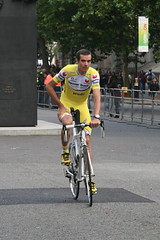
      <![CDATA[<div style="float: right; margin-left: 10px; margin-bottom: 10px;"> <a href="http://www.flickr.com/photos/tla/741524859/" title="photo sharing"><img src="http://farm2.static.flickr.com/1264/741524859_26b07476e9_m.jpg" alt="" style="border: solid 2px #000000;" /></a> <br /> <span style="font-size: 0.9em; margin-top: 0px;">  <a href="http://www.flickr.com/photos/tla/741524859/">David Millar</a>  <br />  Originally uploaded by <a href="http://www.flickr.com/people/tla/">tla</a>. </span></div>
<p>So there I was, stomping around Southwark in a very bad mood indeed.  I had planned to camp out in Trafalgar Square to watch the opening ceremony for the Tour de France, but with an hour to go the square was getting unreasonably packed, and I had concluded that the last thing I wanted was to be jammed in the middle of a huge crowd for three hours.  I had my camera, and I was pretty close to the stage, but I just knew that some idiot (you can tell an idiot by the way he/she is taller than you and blocking your view) would make it impossible for me to get any decent pictures.  Plus, I was by myself, and who wants to be alone in a crowd?</p>
<p>I was now in Southwark, instead of Trafalgar Square, because I had decided to give up on this whole opening ceremony business, and intended to meet a couple of people there.  They were both being suddenly and stubbornly unreachable by phone.  After checking all the pubs I could find in the vicinity, with no success, I couldn't think of anything to do but go watch the opening ceremony after all.  This time, I got off the tube at Westminster, and began to walk up Whitehall.  The street was pretty clear, so I sat down on the curb some distance short of Trafalgar Square to watch the giant TV screen that had been set up.</p>
<p>It was, in short order, time to introduce the teams.  Agritubel made their appearance on the big screen, followed by Saunier Duval and Milram.  Around the time Milram was being introduced, I saw a small pack of riders in Agritubel colors cruise down behind some barriers right in front of me.</p>
<p>Holy cow.  Lucky I had my camera.</p>
<p>Lucky my friends didn't answer their phones, in fact.</p>
<p>I spent the next couple of hours having gloriously clear shots of all the pro riders as their teams took turns cruising up and down Whitehall behind the barriers, while half a million people were stuffed in the middle of Trafalgar Square with no idea this was happening.  I've attached my first amazed shot of David Millar to this post; the rest can be found <a href="http://www.flickr.com/photos/tla/archives/date-posted/2007/07/06/">here on Flickr</a> (with a bonus shot of <a href="http://en.wikipedia.org/wiki/Didi_Senft">Didi Senft</a> thrown in.)</p>
<p>Alas, my camera battery died with six teams to go, so there is no QuickStep and no CSC.  There is consequently no record of the highlight of my evening, which was when I got spectacularly high-fived by Dave Zabriskie.</p>

<p>I just hope I'm so lucky tomorrow.<br clear="all" /></p>]]>
      
   </content>
</entry>
<entry>
   <title>London to Paris -- cycling, camaraderie, and crazy distances</title>
   <link rel="alternate" type="text/html" href="http://www.eccentricity.org/oldblog/2007/07/london_to_paris_cycling_camara.html" />
   <id>tag:www.eccentricity.org,2007://1.27</id>
   
   <published>2007-07-02T22:37:54Z</published>
   <updated>2007-07-07T09:45:15Z</updated>
   
   <summary> Sven discovers a new use for bicycle bottle cages. Originally uploaded by tla. My memory is bugging me now. I was having a surprisingly fun conversation a couple of days ago, about movies and books and TV shows and...</summary>
   <author>
      <name>Tara</name>
      <uri>http://www.eccentricity.org/~tla</uri>
   </author>
         <category term="cycling" scheme="http://www.sixapart.com/ns/types#category" />
   
   
   <content type="html" xml:lang="en" xml:base="http://www.eccentricity.org/oldblog/">
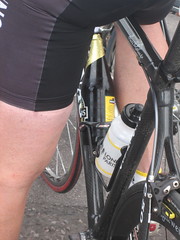
      <![CDATA[<div style="float: right; margin-left: 10px; margin-bottom: 10px;"> <a href="http://www.flickr.com/photos/tla/699743802/" title="photo sharing"><img src="http://farm2.static.flickr.com/1107/699743802_6b92f9aecb_m.jpg" alt="" style="border: solid 2px #000000;" /></a> <br /> <span style="font-size: 0.9em; margin-top: 0px;">  <a href="http://www.flickr.com/photos/tla/699743802/">Sven discovers a new use for bicycle bottle cages.</a>  <br />  Originally uploaded by <a href="http://www.flickr.com/people/tla/">tla</a>. </span></div>My memory is bugging me now.  I was having a surprisingly fun conversation a couple of days ago, about movies and books and TV shows and the like.  It was kind of like what one might expect for a first date, except of course that this wasn't a date.  It was just a couple of people making friends in the middle of a huge endurance event that we were all doing together.  And today I just cannot remember where, or when, or with whom I was having this conversation.

A lot of the <a href="http://www.londres-paris.com/">London - Paris bike ride</a> was like that.  There were ~180 riders, split into 3 groups.  Groups 2 and 3 were there for the ride, but not for the competition; group 1 was competing for jerseys, but when they were off their bikes they were as sociable as everyone else.  There were fewer than 20 women along, so I had the usual trouble that everyone remembered my name and I remembered almost no one's name.  Many of them began to look alike after a while, too -- short hair, dressed in Lycra, cyclist's build of one form or another, helmet.  But they were almost all nice, most of them had the ability to chat pleasantly and take my mind off how tired I was, and quite a few of them were kind enough to give me a hand (literally -- putting a hand on my back to push me) up the hills, and make sure that I didn't fall out of the group.

The camaraderie hadn't begun on day 1.  The groups hadn't really given any thought to working together, and the effect for group 3 (the "slow" group with whom I was riding) was that a few stronger riders (who really should have been in group 2, but didn't want the challenge) led the pack about a mile an hour faster than they should have, people like me fell behind, and a lot of riders were left to ride without any help or companionship.  I got dropped on one of the first hills; one man did his best to ride me back up to the group, but no sooner had I been returned than another hill loomed and I was dropped again.  "Sod it", I thought, "I am an <a href="http://www.aukweb.net/faq.htm">Audax</a> rider and I can damn well continue at my own pace."  40.5km in, the broom wagon pulled up in front of me, motioned me to the side of the road, and had me get in.  I'd simply fallen too far behind.  I was, I have to admit, pretty discouraged at this point, though I stayed philosophical about it.  There was no way I was going to make it all the way to Portsmouth if I was riding to exhaustion with 120km to go.

We pulled up to the second-to-last rider; he narrowly avoided being pulled into the van as well.  Within the next 20km, both he and another woman who had had a crash had been collected after all.  Upon reflection, it is amazing to me that, with the support van so far back, not one rider stopped to wait with this woman after she'd crashed.  It is a good synopsis of the problems that day.  We all rode back up to some of the pack, and the other two got out; I stayed in, because I knew it was all uphill to lunch and I'd just fall ridiculously behind again.

After lunch, I was ready to ride again.  There had been a lot of exhausted muttering from a lot of group 3 riders, but there was no one with the authority to keep the group together.  I spent the entire afternoon session on the bike; I rode most of it alone, and almost none of it at the back of the pack.  We must have been strung out over a kilometer or two.  It's impossible to provide an escort in a situation like this, and the route wasn't as well signed as it could have been; in the end, four of us who had just clumped together had to ask directions from passersby in Portsmouth how to get to the ferry terminal.

Arrival at the terminal was a blessed relief.  I spent a while not talking very much to anyone, but after groups 1 and 2 arrived, some of us collared Sven (the organizer) and pointed out the problems in our group.  We were assured that the culprits who had been pushing the pace too high would get a talking to, and that in France we would have a lead car and more enforced group discipline.  The rest of the afternoon saw us all hanging out in the ferry embarkation point for a couple of hours, until enough of our stuff had caught up with us that we could board.  Once inside the terminal, a whole bunch of people made a beeline for the bar.

I'd never taken a ferry across the Channel before.  This was one of those mini-cruise-ship sorts of ferries, and the company handled the organization of 200 cyclists, several support vehicles, and a lorry full of luggage reasonably well.  I had a large dinner in the restaurant with two of my cabin-mates (Elaine and Megan), and crashed out pretty quickly.  The rocking of the boat was a lovely way to be lulled to sleep.

Day 2 dawned far too early for my liking, but I was feeling surprisingly good.  The roll-out to breakfast calmed some of my nerves, the quiet word of encouragement from Nigel in the support van cheered me up, and the experience of riding along through road closures at a sensible pace set by a lead car, through the French countryside, was magnificent.  I didn't even start to feel tired for 50km.  All the stereotypes were true -- people would come out of their houses to shout "Bonjour," groups of kids in schoolyards would jump up and down behind the fence shouting "Allez allez allez!", and the drivers who were stopped for the road closures would wait patiently for us to pass.  Once during the ride, my chain fell off.  Now normally when this happens, I swear, unclip, and get grease all over my hands while I put the chain back on.  Instead, I swore, shouted to let people behind me know I was slowing, unclipped, and Nigel came running out of the van to put my chain back on for me and give me a shove back up toward the rest of the group.

There were a few hills that saw some of us drop off the back of the group; when that happened, one of the motorcycle escorts would pick out the slowest rider, come up from behind, catch the rider around the waist, and drive the rider back up to the middle of the group.  It is a whole lot of fun to be carried along by a motorbike going "wheeee!!!" uphill.  Although I was invariably at the back of the pack on the uphills, I was quickly gaining a reputation as a demon descender.  There was one particularly glorious twisty descent that went on for a couple of kilometers -- the riders were nicely spread out, and after resting at the back for about 15 seconds, I began to accelerate, picking off the clumps of riders one by one.  I was probably doing twice the speed of some of them, and that short bit of the ride is one of my best memories.

Lunch was 106km along, and I was beginning to fade by that point.  The weather was not great, and getting worse.  A mix-up with the support vans meant that I didn't have my rain jacket, either.  If it hadn't been for a nice man with a spare waterproof shell, I would have been utterly miserable in the afternoon.

18km into the afternoon, I was still feeling pretty tired and my left knee was starting to twinge.  It occurred to me that I should probably get some ibuprofen for the knee, and then it occurred to me that I could not only have ibuprofen, but a chance to rest.  It seemed like wimpiness to me, but like good sense to everyone else.  Guess I have to go with the "good sense."  I wasn't the only one having knee trouble, either; there were already two other riders in the van.  At some point while I was resting, the van pulled over and all the riders passed by, and were greeted by the sight of me sitting down with a copy of Cycling Weekly on my lap, eating a spare rice pudding from lunch, looking like some kind of bon vivant.  I try my best to entertain.

I knew there was a particularly nasty hill in the middle of the afternoon, so told myself (again, wimpiness or sense?  You decide.) that I'd get out when most of the hill was behind us, as I wanted to prevent straining my knee as far as possible.  I rode the final 42km to Alençon, where we were stopped at the side of the road for a couple of minutes to regroup, and I got inexplicably sent up to the front of the pack with some of the other women to lead us into town.  That was kind of fun, leading the procession and all.

After dinner that evening (a fine feast in the restaurant next to the hotel) I went to see the on-site physio about my knee.  It wasn't hurting badly, I said, but it had twinged a bit and I wanted to make sure I could get through the final day.  The physio had me lie down on the mat, found where it hurt, and cheerfully put me through some of the most painful stretches I've ever had in my life.  I guess that was cosmic revenge for wimping out of 30km of the afternoon.  It's truly alarming how physios can start doing something to you, hear you say "oh my god OW that hurts", grin a little wider, and deepen the stretch.  And then, as they do, remark pleasantly that this is the second most painful stretch that can be done to the human body.  Gee, thanks.

After the traumatic physio experience I obviously needed more wine.  I sat in the hotel bar for an hour or so talking to a pleasant and interesting man who turned out to be David Harmon, who is my favorite cycling commentator on British Eurosport.  After a remarkably fun conversation that wandered from archaeology to the fun of speeding downhill to how weird a certain well-known pro rider gets when he's drunk, I turned down yet another glass of wine, turned down a bald-faced proposition from one of the French motorcycle riders ("Are you sleeping alone tonight?  Would you like to not?" or something to that effect), and went to sleep.

My group had had such a good overall time on day 2 that we were allowed to sleep in for an extra hour, but it still meant fewer than six hours' sleep for me.  By the morning of day 3 I was having a hard time even eating breakfast.  I had told myself that I would allow myself a total of 100km in the van (which is the equivalent of skipping a single session), and I had used 70.  I got caught on video camera before our departure looking completely fried.  I don't know what I said to the camera, but it caused Antonia and Rachel, who witnessed the thing, to say things like "That was priceless!"  I live in mild fear of seeing it now.

An hour and a half later, I was still surviving, so I mentally put off my 30km rest until the afternoon.  There were about five men in the group who had given themselves the task of helping the strugglers up the hills, and I had assistance every time I needed it.  Whenever one of these guys got me to the top, they would egg me on to use my Leet Descending Skillz to get back up to the front.  How could I refuse?  I was enormously relieved to make it to lunch, and as I sat there with my food feeling my blood sugar rise again, it began to dawn on me that we were 100km from the end.  Why, that was nearly double digits.

There was a slight but persistent downhill grade for the first half of the afternoon, which helped ease me through.  By the time we got to the slight but persistent uphill grade that I had been dreading, I had warmed up again and barely noticed it.  This was when I began to realize that I was going to pull off riding for the entire day.  About 30km from the end, the motorbikes rolled up to let us know that we'd soon be pulling up to the meeting point.  Groups 1 and 2 were there waiting for us, and the plan was for us to all roll into Versailles together.  There was one more energy-sapping hill before the end, so I can proudly say that I was the last across the line to the final meeting point.  Go me, Lanterne Rouge of L2P 2007.

After a quick rest, several small cakes and biscuits, and a lot of energy drink, we all set out together.  On the last big uphill slog of the day, as I started falling behind, I got a helping hand on my left from a rider named Ken.  A few meters on, I got another helping hand on my right, and started whizzing up through the group with my tag-team of assistance, amid a series of very amused comments from the other riders about the escort I was getting.  I thanked them incoherently when we got to the top, but never had a chance to see who the rider to my right had been.  Later, in the hotel bar, I got asked if I knew that it was Sean Kelly helping me up.  Then I got the piss roundly taken out of me when it became clear that I'd had no idea.  ("I hope you said thank you!!")

So there you go, my brag of the event is that now I've been helped up a hill during a road cyclign event by <a href="http://en.wikipedia.org/wiki/Se%C3%A1n_Kelly_%28cyclist%29">Sean Kelly</a>.  In retrospect, how astonishingly cool was that?

The rest of the way into Versailles was a downhill run.  Did I mention I'm good at descending?  Yeah.  Every now and then I would see one of the flash group 1 riders sail down the outside of the peloton to get up to the front.  Eventually I thought, you know, what's stopping me?  So I picked my way to the outside of the group, and accelerated a little.  I passed maybe 100 riders.  Then after losing some ground on an up, I did it again.  Passed a few more riders.  About 5km from the finish, I made it all the way to the front.  (Well, behind the jersey holders, of course -- I'm not that stupid.)  Once I was at the front, I was damned if I would be left behind again, so I gave the few remaining lumps everything I could possibly muster, and crossed the final timing strip in the top 15.  In the process, I had extended my reputation as a descender well beyond group 3.  Hurrah once again for gender ratios -- how else would I have been so easily recognizable as I flew past everyone?

One of the advantages to being first into the hotel drive was that I was early into my room, early into the shower, and early into the physios' clinic, where I had a much-needed back massage and some more painful hamstring stretching.  After the award ceremony and a bunch of picture-taking, I went out to dinner with a large group, but I was so tired that I had to leave midway through dessert.  The walk back revived me just enough that I had a glass of champagne in the hotel bar with some of the same guys I'd been drinking with the night before, and then I went up to my hotel room secure in the knowledge that I could sleep for ten hours if I liked.  

Sunday was a lovely leisurely day -- breakfast in the hotel until 11, then a taxi to a cafe off the Champs-Elysees where thirty or forty of us hung around until it was time to make our way to the Gare du Nord and our train.  I took the Metro with my new friend Griselda, rather than waiting on the genial disorganization of getting taxis for 40 people.  I arrived in time to snag a bottle of Chablis in the duty-free shop, and spent most of the train journey listening to David Harmon tell stories about cycling personalities and what it's like to commentate something like the Tour de France, listening to him and Nick and Malcolm swap banter about saddles and shorts and pros that they knew, and enjoying the feeling of almost being one of the guys.

The big question of the day was "Will you do it again next year?"  I think it's becoming rapidly clear that yes, of course I will.  Hills be damned.<br clear="all" />]]>
      
   </content>
</entry>
<entry>
   <title>fighting comment spam</title>
   <link rel="alternate" type="text/html" href="http://www.eccentricity.org/oldblog/2007/05/fighting_comment_spam.html" />
   <id>tag:www.eccentricity.org,2007://1.23</id>
   
   <published>2007-05-12T00:58:28Z</published>
   <updated>2007-05-12T01:43:44Z</updated>
   
   <summary>You would think, given the frankly microscopic readership numbers I have here, that comment and trackback spam wouldn&apos;t be that much of a problem. If you thought that, you might also think that there&apos;s no way you can get sand...</summary>
   <author>
      <name>Tara</name>
      <uri>http://www.eccentricity.org/~tla</uri>
   </author>
         <category term="admin" scheme="http://www.sixapart.com/ns/types#category" />
   
   
   <content type="html" xml:lang="en" xml:base="http://www.eccentricity.org/oldblog/">
      <![CDATA[You would think, given the frankly microscopic readership numbers I have here, that comment and trackback spam wouldn't be that much of a problem.  If you thought that, you might also think that there's no way you can get sand in your shoes by walking on the beach for half a minute.  Either way, you'd be wrong.

I've been under concerted trackback spam attack for the past couple of days, so I've set the "one day only" flag for trackbacks.  Since I've never had a legitimate one, I don't think this will be much of an issue.

Although I haven't been under such a concerted attack in comments, I have also had to deal with comment spam for a while now, so I have downloaded, installed, and tested <a href="http://bradchoate.com/weblog/2007/01/07/another-antispam-strategy-no-anonymous-linking">this plugin</a>.  The upshot is that <b>you may now only post a URL in a comment here if you are signed in via TypeKey.</b>

If this works to block the spam, I might even think about unmoderating comments.  Wild.]]>
      
   </content>
</entry>
<entry>
   <title>we need a Department of Taste.</title>
   <link rel="alternate" type="text/html" href="http://www.eccentricity.org/oldblog/2007/05/we_need_a_department_of_taste.html" />
   <id>tag:www.eccentricity.org,2007://1.22</id>
   
   <published>2007-05-11T23:42:11Z</published>
   <updated>2007-05-11T23:44:13Z</updated>
   
   <summary>The object of this exercise was to produce a passport that would, upon viewing, compel the bearer to arise, place hand on heart, and burst out with a rendition of &quot;America the Beautiful.&quot;</summary>
   <author>
      <name>Tara</name>
      <uri>http://www.eccentricity.org/~tla</uri>
   </author>
         <category term="random" scheme="http://www.sixapart.com/ns/types#category" />
   
   
   <content type="html" xml:lang="en" xml:base="http://www.eccentricity.org/oldblog/">
      I got my new passport today.

I had a pretty good idea that it would be one of the new RFID passports, but what I didn&apos;t realize is that it&apos;s also been re-designed. It&apos;s not enough that passports from the Land of the Free and the Home of the Brave be safe, secure, and fraud proof, you see.

Looking at the passport, I would guess that the Department of State had a lengthy consultation with fourth-grade civics classes across the country, maybe culminating in a design competition. The object of this exercise was to produce a passport that would, upon viewing, compel the bearer to arise, place hand on heart, and burst out with a rendition of &quot;America the Beautiful.&quot;

The onslaught of patriotism begins on the inside front cover, with the last few lines of the national anthem in a manuscript font (think of all those reproductions of the Declaration of Independence) hovering over an artist&apos;s impression of, presumably, Francis Scott Key looking toward Fort McHenry. The page that bears the Secretary of State&apos;s message to the reader (now in Spanish, as well as English and French) also bears a quote from Abraham Lincoln. The photo page is accompanied by an extract from the Constitution, grand &quot;We the People&quot; and everything, observed by a large bald eagle. Flipping through the passport, the viewer is treated to an inspiring image of some aspect of America the Beautiful and a patriotic quote on every page; finally, the inside back cover carries an inspiring vista of Space The Final Frontier, accompanied by a quote from Ellison S. Onizuka.

I&apos;m not sure I&apos;ll be able to cross borders with a straight face anymore.
      
   </content>
</entry>
<entry>
   <title>mysteries of the royal lifestyle</title>
   <link rel="alternate" type="text/html" href="http://www.eccentricity.org/oldblog/2007/05/mysteries_of_the_royal_lifesty.html" />
   <id>tag:www.eccentricity.org,2007://1.21</id>
   
   <published>2007-05-07T23:04:35Z</published>
   <updated>2007-05-07T23:14:12Z</updated>
   
   <summary>I realized (again) this week that I cannot fathom what it must be like to be the Queen. She is head of state of the UK and other Commonwealth countries. She is immensely rich. She isn&apos;t what one might call...</summary>
   <author>
      <name>Tara</name>
      <uri>http://www.eccentricity.org/~tla</uri>
   </author>
         <category term="life in the UK" scheme="http://www.sixapart.com/ns/types#category" />
   
   
   <content type="html" xml:lang="en" xml:base="http://www.eccentricity.org/oldblog/">
      <![CDATA[I realized (again) this week that I cannot fathom what it must be like to be the Queen.

She is head of state of the UK and other Commonwealth countries.  She is immensely rich.  She isn't what one might call "powerful", in that her constitutional prerogatives are limited, and her job security rests on not making her subjects angry enough to ditch the monarchy, but she is certainly what one might call "influential".  She has many duties, but also seems to sensibly book herself the odd week or several away at one of her country palaces.  She doesn't spend her life overseas, but does make the occasional state visit.

This week, for example, she and Prince Philip are visiting the US.  Nothing they haven't done before, but this time the itinerary included a visit to Louisville for the Kentucky Derby, which according to the BBC "<a href="http://news.bbc.co.uk/2/hi/uk_news/6627481.stm">fulfilled a long-held ambition</a>" (elsewhere reported as "a lifelong dream") to attend the race.

How can someone this rich, this influential, and this free (within reason) to do whatever she likes manage to not get around to something as simple as this until she is 81?]]>
      
   </content>
</entry>
<entry>
   <title>responsible voting</title>
   <link rel="alternate" type="text/html" href="http://www.eccentricity.org/oldblog/2006/12/responsible_voting.html" />
   <id>tag:www.eccentricity.org,2006://1.10</id>
   
   <published>2006-12-07T01:00:21Z</published>
   <updated>2006-12-07T01:05:30Z</updated>
   
   <summary>I am not an &quot;issues voter.&quot;  Nor do I think I should be one.</summary>
   <author>
      <name>Tara</name>
      <uri>http://www.eccentricity.org/~tla</uri>
   </author>
         <category term="politics" scheme="http://www.sixapart.com/ns/types#category" />
   
   
   <content type="html" xml:lang="en" xml:base="http://www.eccentricity.org/oldblog/">
      Last month, around Election Day, I inadvertently provoked an impassioned rant about the ignorance of most voters, particularly those who claimed to be &quot;issues voters&quot; -- that we have only a vague idea, if we have any idea at all, of the daily machinery of government and how it works; that most of us couldn&apos;t even tell you what bills our representative had sponsored.  Thinking this over later, I realized the basic fallacy in this person&apos;s rant as it applies to me.

I am not an &quot;issues voter.&quot;  Nor do I think I should be one.

I don&apos;t have a list of issues with a &quot;for&quot; or &quot;against&quot; tickybox next to each of them.  When I read candidates&apos; positions on &quot;the issues&quot;, I am not matching their answers with my own.  It&apos;s not that I have no opinions.  It&apos;s that I don&apos;t have the time or the inclination to discover, research, and form an informed opinion on each question of law as it arises.

Fortunately for me, we have a system of representative democracy.  This means that I get to cast my vote for a person whose job it is to stand in for me, and for my neighbors, and do the research and decision-making on our behalf.  I have to leave it in this representative&apos;s hands to decide what he or she thinks is best for each particular issue, because it will be my representative, not me, casting the vote.  I can shelve the political research and get back to the computer programming.  Now we are both doing the jobs we want to do.

Since it will be my representative whose decisions will translate into votes cast for or against each of the issues that arise, I need to vote for a representative whose judgment I trust.  That means that I have to select the candidate who displays the best decision-making skills compared to his or her fellow candidates.  Now there are plenty of people who consider a &quot;good decision&quot; to be a &quot;decision I happen to agree with&quot;, even if the person in question arrived at the decision by a completely different logic path.  For these people, choosing the candidate whose votes coincide with their opinions is a reasonable selection mechanism.

It&apos;s not the selection mechanism for me, though.  The candidate who will best represent me is the candidate who thinks through all aspects of an issue, understands that there are very few issues with a clear &quot;right&quot; and &quot;wrong&quot; answer, and displays solid reasoning skills to arrive at a vote on the issue in question.  So when I read candidate statements, I&apos;m looking for evidence that they have thought out their positions on The Issues, and can defend them effectively in discussion.  (Yes, this makes it very hard for me to choose political candidates.  Candidates&apos; issues statements almost never display a decision-making process; the only real way for me to form an opinion is to speak to the candidate, or otherwise watch him or her debate a position.)

So this is my defense of my political ignorance.  Yes, I am a reasonably intelligent voter who can&apos;t name three bills that my Senator has sponsored, and can&apos;t tell you the difference between an Authorization and an Appropriation, and don&apos;t know what &quot;cap and trade&quot; means.  Yes, that information is out there for me to find, should I choose to invest the time.  But my priorities lie elsewhere, because I live in a political system where I am allowed to leave the understanding of these things to others, and concentrate on doing the things that I do best.  This is not only a fine example of the economic principle of &quot;comparative advantage&quot;; it is also what living in a representative democracy is all about.
      
   </content>
</entry>
<entry>
   <title>resuming service shortly</title>
   <link rel="alternate" type="text/html" href="http://www.eccentricity.org/oldblog/2006/11/resuming_service_shortly.html" />
   <id>tag:www.eccentricity.org,2006://1.9</id>
   
   <published>2006-11-15T00:03:59Z</published>
   <updated>2006-11-15T00:35:03Z</updated>
   
   <summary>I have finally gotten round to setting up MT on the new incarnation of eccentricity.org. There goes my best excuse for not putting anything new up here in months....</summary>
   <author>
      <name>Tara</name>
      <uri>http://www.eccentricity.org/~tla</uri>
   </author>
         <category term="admin" scheme="http://www.sixapart.com/ns/types#category" />
   
   
   <content type="html" xml:lang="en" xml:base="http://www.eccentricity.org/oldblog/">
      I have finally gotten round to setting up MT on the new incarnation of eccentricity.org.  There goes my best excuse for not putting anything new up here in months.
      
   </content>
</entry>
<entry>
   <title>Americans and passports</title>
   <link rel="alternate" type="text/html" href="http://www.eccentricity.org/oldblog/2006/06/americans_and_passports.html" />
   <id>tag:www.eccentricity.org,2006://1.8</id>
   
   <published>2006-06-15T20:13:00Z</published>
   <updated>2006-11-15T00:37:12Z</updated>
   
   <summary>But there&apos;s nothing like my inner contrarian to make me re-think my assumptions, especially when my people are being dismissed as ignorant by an ignorant man.</summary>
   <author>
      <name>Tara</name>
      <uri>http://www.eccentricity.org/~tla</uri>
   </author>
         <category term="life in the UK" scheme="http://www.sixapart.com/ns/types#category" />
   
   
   <content type="html" xml:lang="en" xml:base="http://www.eccentricity.org/oldblog/">
      On my trip out to Dublin a couple of weeks ago, I found myself seated next to a besuited Lad. He was one of those types who is ignorant of his ignorance, and accustomed to being in control of the conversation, especially if the conversational partner is a woman (even more so, maybe, if she is an American woman, as everyone knows that Americans don&apos;t have the least clue about anything outside America.) He never got hostile, happy to say, but he was the sort to be very surprised that I would display assertiveness. Eventually the conversation came round to Americans, and American stereotypes, and the tired old trope about how only 0.000037% of Americans have passports.

Back when I was younger and more stereotypically Europhile, I have to admit, I was also self-righteously horrified by this statistic. But there&apos;s nothing like my inner contrarian to make me re-think my assumptions, especially when my people are being dismissed as ignorant by an ignorant man.

The United States is deceptively big. Just ask any foreigner who has made the mistake of driving a long distance on a straight highway in the West, and found himself 800 miles from where he started having only crossed one or two state borders and needing to catch a flight back home the next morning. Moreover, there are a whole lot of places we have been able to go without a passport. Canada. Mexico. The Bahamas. Much of the rest of the Caribbean. Hawaii. The British, in contrast, need a passport to get outside the UK and Ireland.

So it seems that our insularity just might stem from, well, our isolation. The world becomes ever smaller and all, but it is ridiculous to condemn a country simply because most of its inhabitants -- who, lest we forget, have between 10 and 15 days of paid holiday a year -- have not chosen to spend the 5 days they can afford being jetlagged and miserable in Mallorca.

Most of us will get passports, eventually. Probably for our grand European tours, when we&apos;ve retired and have time to appreciate the trip.
      
   </content>
</entry>
<entry>
   <title>economics for everyone</title>
   <link rel="alternate" type="text/html" href="http://www.eccentricity.org/oldblog/2006/05/economics_for_everyone.html" />
   <id>tag:www.eccentricity.org,2006://1.7</id>
   
   <published>2006-05-27T11:43:00Z</published>
   <updated>2006-11-15T00:38:29Z</updated>
   
   <summary>Economics here is not just about finance, and it is certainly not about incomprehensible terms like &quot;equities volatility exotics&quot;.</summary>
   <author>
      <name>Tara</name>
      <uri>http://www.eccentricity.org/~tla</uri>
   </author>
         <category term="books" scheme="http://www.sixapart.com/ns/types#category" />
   
   
   <content type="html" xml:lang="en" xml:base="http://www.eccentricity.org/oldblog/">
      A common sort of post for a weblog is the book review. I don&apos;t know how many book reviews I&apos;ll attempt, so this is more of a genre review.

A co-worker, who has been generous with his book recommendations, turned me onto a pair of books written by economists. The first one, which everyone had heard of, is Freakonomics. The second, which may be the better book, is The Undercover Economist.

Freakonomics has gained a lot of notoriety for the link it draws between legalized abortion and crime rates. I suspect it further alienates people with its analysis of &quot;what makes a good parent.&quot; This is a shame, because the book as a whole has some extremely interesting food for thought, and the recent trend of &quot;economists writing books about random things&quot; is something that, based on what I&apos;ve read so far, should be highly encouraged. Happily, this is where The Undercover Economist steps up as a less controversial (and less self-promoting) alternative to recommend.

Economics here is not just about finance, and it is certainly not about incomprehensible terms like &quot;equities volatility exotics&quot;. It&apos;s about cost, and value, and the natural inclination of people to seek the best (time, monetary, happiness, etc.) value for the lowest (happiness, time, monetary, etc.) cost, given the constraints under which they are operating. This means that the things that are considered &quot;good&quot; to most of the Western world (e.g. an education) may be rendered utterly useless under certain constraints (e.g. living in Cameroon), and so all our attempts to improve the educational system in Cameroon, without attempting to understand or change their constraints, become a waste of time and money.

Freakonomics will only be read by a self-selecting group of people -- this is the consequence of its authors&apos; decision to generate buzz by being controversial. The Undercover Economist is not controversial, so doesn&apos;t have much buzz. That gives me more hope that its premise will be understood. Then, maybe we could begin to do the right thing for people in Nepal and Cameroon.

      
   </content>
</entry>
<entry>
   <title>statement of purpose</title>
   <link rel="alternate" type="text/html" href="http://www.eccentricity.org/oldblog/2006/05/statement_of_purpose.html" />
   <id>tag:www.eccentricity.org,2006://1.6</id>
   
   <published>2006-05-26T19:40:00Z</published>
   <updated>2006-11-15T00:39:14Z</updated>
   
   <summary>&quot;what I&apos;ve been thinking about today if I could find the energy to write it all down.&quot;</summary>
   <author>
      <name>Tara</name>
      <uri>http://www.eccentricity.org/~tla</uri>
   </author>
         <category term="admin" scheme="http://www.sixapart.com/ns/types#category" />
   
   
   <content type="html" xml:lang="en" xml:base="http://www.eccentricity.org/oldblog/">
      I can&apos;t quite articulate why I started this weblog, other than the perennial &quot;it seemed like a good idea at the time&quot;. For the time being, it is meant to be an online journal of my impersonal thoughts. It&apos;s no LiveJournal, no &quot;what I did today&quot;, but more &quot;what I&apos;ve been thinking about today if I could find the energy to write it all down.&quot;

Expository writing is something that I&apos;m fairly good at. Writing is something that I don&apos;t do nearly enough of. Maybe this is just a way of attempting to keep me in the habit, via the means that come most easily.

      
   </content>
</entry>

</feed>